
Cloud Telephony Solutions (VoIP)
Cloud telephony solutions offer businesses of all sizes a cost-effective way to handle telephone calls through internet connections, without relying on a traditional business phone installation. Cloud Central plans cloud-based telephony around your business needs, then delivers a scalable setup that keeps people reachable wherever work happens.
From a growing professional services firm to a large enterprise, the right VoIP environment can streamline daily contact, improve the customer experience and provide seamless communication across locations, devices and working patterns, without unnecessary complexity or the cost of features nobody actually needs.
Book a Free Cloud Telephony VoIP ConsultationYour Business Phone System Should Keep Calls Moving Wherever Your Team Works
A modern business cannot depend on calls arriving only at one desk or building. Voice over Internet Protocol carries each conversation through data connections, while cloud calling uses a cloud computing model instead of a local exchange. Staff can answer through approved devices. They can transfer callers without starting again and see whether colleagues are available.
The result should feel simple, yet its design must be deliberate. Cloud Central shapes the service around daily demand, busy periods, remote work and customer expectations, keeping communication practical when teams move, offices change or call volumes increase without warning during the busiest periods.
Plan Your Cloud Telephony Setup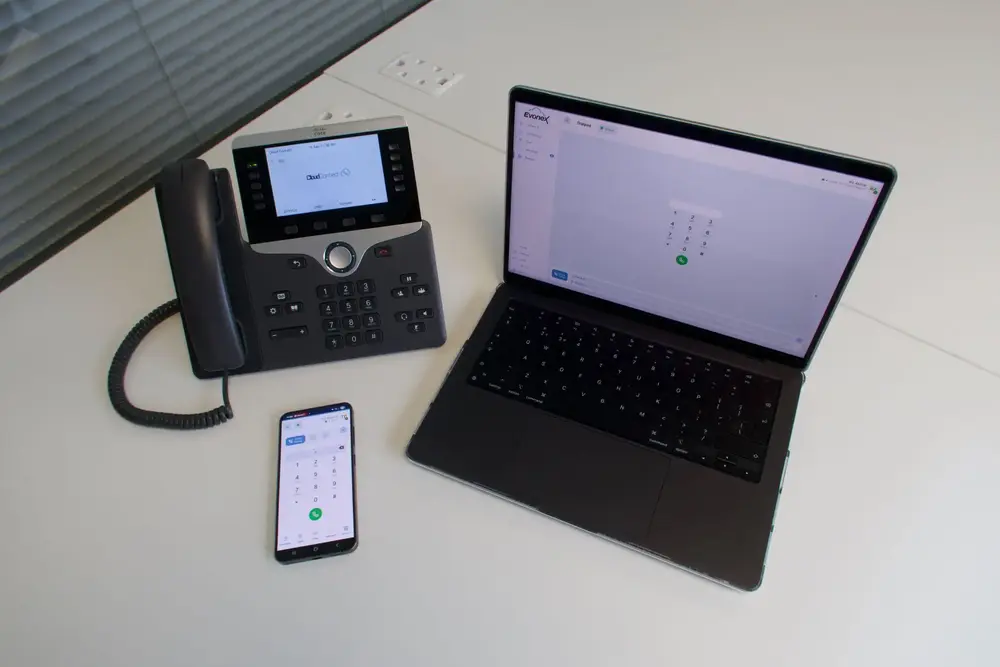
Cloud Central’s Cloud Telephony VoIP Solutions
The starting point is not a fixed bundle of licences. It is how calls enter, move through and leave your organisation. Cloud Central can design the telephony system, configure users, prepare compatible devices and establish the rules needed for a full phone system. Requirements differ because no standard package suits every organisation.
Some teams need structured queues; others need mobile access or reporting. The capabilities below show how one connected environment can support reception, everyday calling, number management and insight. They also cover applications, Microsoft Teams, multiple locations and continuity.
Intelligent Call Routing and Auto Attendants
Callers should reach the right destination without repeatedly explaining why they rang. Menu-based IVR can guide them, while hunt groups and call queues organise demand when several employees may answer. Time-based routing changes the path automatically. Overflow destinations catch unanswered traffic; holiday and out-of-hours rules protect service outside normal schedules. Departmental or individual voicemail can then capture a message. Voicemail-to-email sends the recording or notification to the appropriate employee; call forwarding then directs agreed exceptions to an employee’s direct number.
Business Calling Across Desk Phones, Computers and Mobiles
Employees can use compatible VoIP desk phones where a physical handset suits the role, then switch to a desktop softphone or mobile application elsewhere. Their consistent business number stays with them. Presence information shows availability, and calls can transfer between devices without forcing the caller to reconnect. Cloud Central can supply managed hardware for business and configure access for office, home or mobile work, creating one practical experience rather than separate arrangements for each place or device throughout each day.
Business Number Porting and Number Management
Eligible numbers may be retained where possible, including geographic numbers, non-geographic numbers and direct dial numbers. New numbers can be assigned to a team or location. Cloud Central coordinates porting, checks the current contract and may arrange temporary routing where appropriate, reducing avoidable disruption. Transfer is never assumed. Every number must first be checked for eligibility, ownership and provider restrictions. Only then can the changeover plan protect familiar contact routes while establishing the new business telephone environment for every caller.
Call Recording, Reporting and Management Information
Reporting turns call activity into evidence. Inbound and outbound reports reveal demand; missed-call records show where follow-up is needed. Queue statistics expose waiting times, while wallboards provide real-time operational visibility. Trends can be reviewed by user or department, supporting better staffing decisions and service improvements. Call recording may be enabled where required. Its capture, retention and access controls must reflect the organisation’s legal obligations, regulatory duties and internal policies, so useful management information does not create unnecessary risk or liability.
CRM and Business Application Integration
Compatible integrations can connect an incoming call with the relevant customer record, reducing manual searching before an employee responds. That context helps the team understand who is calling and why earlier contact may matter. It can also support smoother note-taking and follow-up inside selected business applications. Compatibility varies, however. Cloud Central will confirm the CRM edition, available connector and required workflow during scoping, rather than promising that every platform can integrate or that every process will work unchanged after launch.
Microsoft Teams Calling
Organisations already working in Microsoft Teams may be able to bring external business calling into the same environment. Employees can place or receive calls to external telephone numbers through Teams, subject to the licensing, carrier arrangement and technical configuration. This is a calling option, not an explanation of the complete platform. Cloud Central can scope the approach and link readers to its broader Microsoft Teams or unified communications page, where collaboration features such as video conferencing can be explained properly.
Multi-Site Cloud VoIP Phone Systems
Branches, offices and remote employees can share one centrally managed IP telephony environment without losing the structure each location needs. Local or direct dial numbers can remain associated with the appropriate site where eligible. Routing rules can reflect individual opening hours, departments and overflow paths. Administration stays joined up. The organisation can add a location, update users or change call behaviour from one controlled platform, supporting consistent service while respecting how separate teams genuinely operate during growth or internal restructuring.
VoIP Call Continuity and Failover Planning
Continuity planning keeps incoming callers connected when the usual destination is unavailable. Alternative numbers, mobile applications and automatic rerouting can provide another path, supported by resilient primary and backup connectivity. Yet hosting the platform in the cloud does not remove local dependencies. Broadband can fail. So can network equipment, power or user devices. Cloud Central identifies those exposure points and builds proportionate business continuity measures around them, with realistic recovery arrangements rather than assumptions about uninterrupted service during serious disruption.
Check Your Connectivity and Network Before Moving Calls to VoIP
Reliable Voice over Internet Protocol depends on more than the download speed shown in a broadband advertisement. Cloud Central assesses the connection under normal working conditions, the number of simultaneous calls expected and the local network carrying their traffic. Upload capacity matters. So do delay, stability and congestion when other applications are busiest. Router or firewall settings may also affect voice quality.
Before recommending a move, the assessment should establish whether the existing environment is ready, what needs adjustment and where resilience is missing. These areas require particular attention before any migration begins:
- Available upload and download capacity.
- Expected simultaneous call volumes.
- Latency, jitter and packet loss.
- Network congestion during working hours.
- Router, firewall and switch configuration.
- Traffic prioritisation where appropriate.
- Wi-Fi coverage for wireless calling.
- Primary and backup connectivity.
- Power and device dependencies.

A Controlled Migration From Your Existing Phone System
Migration is not complete when licences become active. Cloud Central first examines the current telephone service, the numbers in use, connected devices and the way callers move between people or departments. It then rebuilds that behaviour in the new phone system, tests every critical route and prepares employees for change. Porting and cutover need careful coordination. Temporary arrangements may be necessary.
The objective is a controlled transition that protects live calls while old services are withdrawn at the right time. Seven practical stages keep the work organised from discovery through post-launch review and ongoing optimisation:
1
Audit the Existing Telephony Estate
2
Map Users, Departments and Call Requirements
3
Design the Cloud VoIP Configuration
4
Prepare Number Porting and the Changeover
5
Configure and Test Before Launch
6
Train Employees and Complete the Migration
7
Review Call Performance After Launch
Benefits of Cloud Telephony VoIP Systems
A well-designed service changes more than the equipment used to answer a call. Employees can respond sooner. Managers gain clearer oversight, costs become easier to understand and location matters less. The business also gains room to adjust as demand shifts, without recreating an old on-site exchange whenever something changes.
These outcomes depend on thoughtful configuration and reliable support, not cloud hosting alone. The benefits below begin with stronger protection and simpler administration. Connected applications and flexible work follow. Clearer costs matter too, alongside service visibility, resilience and stronger future readiness.
Secure Business Communications
Protection begins with platform controls, managed user access and timely updates, but it cannot stop at the hosted service. Each device must be secured. The internet connection and local environment need the same attention, because weak endpoints or careless administration can undermine otherwise strong safeguards. Cloud Central considers network security alongside permissions and operational responsibilities, helping the organisation establish sensible access without making routine calling difficult. This connected approach supports safer communications and clearer accountability across the working environment too.
Easy to Use and Manage
A system becomes valuable when employees can handle calls confidently and administrators can make ordinary changes without delay. Compatible desk phones keep familiar controls where they are useful. Desktop and mobile applications extend the same experience elsewhere. Through a central portal, authorised staff can manage users, numbers and routing settings without rebuilding the environment. Less friction means fewer workarounds, quicker onboarding and stronger adoption, allowing teams to focus on conversations while retaining appropriate administrative control over the service after launch.
Integration With Business Applications
Connecting compatible calling services to CRM records or workplace tools reduces the distance between a conversation and the information behind it. Caller details can appear sooner. Employees spend less time searching, notes remain closer to the customer record and follow-up becomes easier to coordinate. Microsoft Teams can also support external calling where the configuration fits. These connections increase productivity without forcing every task into one application, provided the available integrations are confirmed before implementation and matched to genuine working practices.
Flexible and Remote Working
Employees no longer need to sit beside one physical desk phone to remain reachable. An approved office device can handle one call; a computer or mobile application can handle the next from home or another authorised location. The same business number remains recognisable to customers. Transfers continue between users and suitable devices, giving hybrid teams greater freedom while preserving a professional identity. That flexibility supports recruitment, travel and changing work patterns without making callers navigate a different arrangement each time.
More Predictable Telephony Costs
Subscription pricing can make recurring licence costs easier to identify and review than maintaining ageing exchanges or installing physical lines for every change. Capital spending may fall, although savings depend on connectivity, devices, calling plans and support requirements. The point is control, not a blanket promise of the cheapest service. Unlike on-premise telephony, the hosted model can adapt without replacing a local exchange. Cloud Central helps organisations remove unsuitable licences and plan adjustments as staffing levels or service demands change.
Improved Call Routing and Visibility
Better routing reduces unnecessary transfers and gives callers a clearer path to the right team. Queues can distribute demand more fairly; overflow or time rules prevent traffic from stopping at an unavailable destination. Reporting then shows where service breaks down. Missed calls, peak periods and waiting-time patterns can guide staffing or schedule changes. Together, those improvements strengthen call management and create a responsive customer journey, because decisions come from observed behaviour rather than assumptions about when and why people call.
Greater Call Continuity
When an office becomes unavailable, incoming traffic can move to mobile users, another site or an alternative number. That flexibility reduces dependence on a single destination and gives managers options during disruption. It is not automatic resilience. Connectivity, power and local equipment still need assessment, while disaster recovery services should reflect the organisation’s wider priorities. With those dependencies addressed, planned rerouting supports faster decisions and greater peace of mind when normal working arrangements cannot continue as expected over critical periods.
Technology Ready for the Future
Modern cloud telephony systems can receive ongoing updates and accommodate new capabilities without replacing an entire exchange. That flexibility also prepares organisations for the UK’s retirement of the traditional PSTN network. Change remains deliberate. Licences still need review as requirements develop. Devices and integrations do too. A future-ready setup gives the organisation room to adapt, rather than locking tomorrow’s calling patterns into yesterday’s hardware or treating every improvement as another major infrastructure project with avoidable cost and disruption for users.
VoIP Cloud Telephony That Can Change With Your Organisation
Organisations rarely stand still. People join, offices move and demand rises unexpectedly, so the calling environment must adjust without forcing a replacement project each time. A virtual phone platform makes carefully controlled changes possible within the same core service.
The following examples show what can be managed as requirements develop:
- Add or remove users as staffing changes.
- Create calling arrangements for a new department.
- Connect an additional office or branch.
- Change opening hours and out-of-hours routing.
- Adjust queues during seasonal demand.
- Support permanent or temporary remote workers.
- Introduce additional business numbers.
- Review licences as user requirements change.
- Modify call reporting and recording access.
- Redirect calls during an office closure or disruption.

Cloud VoIP Telephony Designed and Supported by Cloud Central
Cloud telephony touches far more than the dial tone. Connectivity matters, as do local networks and user devices. Security controls matter too. So does responsive everyday IT support. Cloud Central treats these areas as connected parts of dependable business communication solutions, rather than isolating the phone platform from everything beneath it.
This view exposes weak dependencies, clarifies ownership and keeps later changes practical. It also gives clients one accountable partner when a fault crosses technical boundaries. That matters during complex service incidents. The approach is reflected below:
- One team across telephony, connectivity and IT
- A system designed around real call behaviour
- Independent advice without forcing a standard setup
- Migration planning that protects business numbers and calls
- Support after the phone system goes live
- Wider communication and network expertise
FAQs
What is a cloud-based phone system?
A cloud telephone system is a phone service delivered over the internet instead of traditional copper lines or local hardware. A third-party provider hosts the core platform on remote servers, while employees use desk phones or applications to make and receive calls. Administration is handled centrally through an online portal.
How to choose a cloud telephony provider?
The best cloud telephony service is the one that fits call demand. Compare reliability, uptime commitments and support SLAs. Check features and compatible integrations, then examine security controls, compliance obligations and transparent costs. A capable online telephony provider should also scope connectivity, migration responsibilities and ongoing assistance before recommending a configuration.
Can we keep our existing phone numbers when moving to cloud based telephony?
Usually, yes. Number porting can transfer many existing numbers to the new service, including geographic 01 and 02 numbers, non-geographic 03 numbers and mobile numbers. Eligibility is not automatic, however. Cloud Central must check ownership, the current provider and contractual restrictions before confirming precisely which numbers can move and when.
How do we know whether our broadband can support VoIP calls?
Test four core metrics: bandwidth, latency, jitter and packet loss. Most modern broadband connections can carry internet telephony because one voice call uses little data, but headline speed alone is insufficient. Measure upload and download capacity, expected simultaneous calls and busy-period congestion, then review local network configuration and backup connectivity arrangements.
Can different offices use one cloud VoIP phone system without losing their local numbers?
Yes. Different offices can share one centrally managed environment while retaining eligible local numbers. Each site can keep its geographic identity, departmental structure, opening hours and routing rules, yet administrators control users and policies together. Number eligibility and porting arrangements should be confirmed before the shared configuration is properly finalised.