
Business Broadband
Business broadband now carries far more than email and web browsing. It supports Microsoft 365, cloud applications, video meetings, payment processing, remote access, backups, and daily communication. For small and medium-sized businesses, the right connection protects productivity, keeps people responsive, and creates a dependable foundation for work that cannot simply pause.
Check Your Business Broadband OptionsYour Business Cannot Afford Broadband That Becomes a Single Point of Failure
When the primary connection fails, the damage moves quickly beyond slow browsing. Staff can lose Microsoft 365 access, cloud phone calls may drop, customer messages stop moving, and card payments or hosted platforms can become unavailable. Remote workers may be locked out while office teams lose shared files and collaboration tools. Revenue, service, and trust can all suffer together.
Because broadband is essential to these workflows, selecting the cheapest headline speed is a weak risk decision. The stronger approach measures operational dependency, acceptable downtime, restoration expectations, and the cost of leaving one connection as a single point of failure today.

Your Cloud Applications Depend on the Connection
Microsoft 365, SaaS platforms, CRM tools, hosted systems, file sharing, and other cloud applications remain useful only while users can reach them. A dependable internet connection keeps records available, documents synchronised, and workflows moving. Poor performance creates delays that spread across departments, even when every cloud platform remains fully operational.
Your Phone System Runs Over the Internet
Cloud telephony solutions carry calls through the internet, so call quality depends on a stable connection with sufficient capacity. VoIP phone systems can expose jitter, delay, or packet loss that browsing may hide. Resilience matters too, because a failed primary line can otherwise silence office handsets and interrupt customer conversations.
One Broadband Failure Can Stop an Entire Office
A warehouse processing orders faces greater exposure than someone checking email. Identify which locations support revenue, which employees handle customers, and which systems control payments or access. Then define how long each can operate offline. This assessment reveals where reliable business broadband, backup service, or alternative working arrangements are justified.
Growth Can Outpace Your Existing Connection
More employees bring more laptops, phones, and connected devices. At the same time, video meetings multiply, cloud workloads deepen, and larger files move often. Add concurrent VoIP calls, guest Wi-Fi, and connected equipment, and yesterday’s capacity can become tomorrow’s constraint. Growth needs headroom, not repeated emergency upgrades after performance declines.
Cloud Central’s Business Broadband Solutions
Cloud Central assesses how your organisation works before recommending broadband for business. We consider users, systems, premises, cloud reliance, growth plans, and the cost of disruption.
As an independent UK business supplier, we focus on fit rather than forcing standard business broadband packages onto every environment. The objective is practical: align the primary service, backup approach, network, and support model with requirements. From there, we recommend one design.
Business Fibre Broadband
Business-grade fibre supports operations where teams need access to email, cloud platforms, remote systems, and online services. The right broadband plan depends on local availability, user numbers, downloads, upload demand, video conferencing, and off-site access.
Some organisations need superfast fibre performance; others need stronger upload capacity or more room for concurrent activity. We compare appropriate fibre speeds and characteristics before recommending an option, ensuring the chosen business broadband deal matches how people actually work rather than an attractive headline alone.
Full Fibre Business Broadband
Full fibre broadband (FTTP) runs directly to the premises and is well suited to demanding environments. It uses fibre optic cables throughout the access route, avoiding the final copper section found in part-fibre services.
That can support multiple simultaneous users, cloud-heavy work, high-quality video meetings, large transfers, and planned growth. Availability still varies by address. Cloud Central checks which business broadband products can reach your premises, reviews likely demand, and recommends a connection only after those practical options are clear.
Business Broadband With Failover
Failover adds a secondary route that can take over if the primary service stops. Switching may be automatic through a correctly configured router or follow a planned recovery process, depending on operational need. A 4G network or 5G mobile broadband link can provide backup where signal, capacity, and data terms are suitable.
The design keeps essential cloud applications, communications, payments, or booking systems accessible. It reduces outage impact, but only when routing, monitoring, testing, and recovery responsibilities are established beforehand.
Static IP Addresses
A static IP keeps the same address whenever the service reconnects. Most organisations do not need one to browse, use Microsoft 365, or join meetings. It becomes relevant when hosted services must be reached consistently, a VPN depends on a known endpoint, remote access is configured, or an external platform allowlists approved addresses.
We confirm the technical requirement first. That prevents a business customer from choosing an unsuitable broadband package or discovering too late that a critical configuration needs it.
Business Wi-Fi and Network Connectivity
The incoming line reaches the premises; routers, switches, and wireless access points determine what users actually experience. We consider office layout, coverage gaps, device density, guest Wi-Fi, and performance across work areas before configuring the network.
Appropriate segmentation can separate visitors, staff devices, and sensitive systems, while security features support safer access. A business grade design also accounts for equipment placement and management. Strong internet connectivity has limited value when the internal network cannot distribute capacity consistently throughout the building.
How We Set Up Your Business Broadband
Deployment starts before an engineer arrives. We establish organisational needs, what the premises can receive, and how services should continue during change. Installation, equipment, testing, and support are coordinated carefully with the current provider around that plan, reducing disruption and ambiguity. Here is how we take the service into operation.
- Connectivity Requirements Assessment
- Availability and Connection Review
- Broadband and Resilience Design
- Installation and Migration Planning
- Router and Network Configuration
- Testing and Go-Live
- Ongoing Business Support
The Right Broadband Speed Depends on How Your Business Works
An advertised Mbps figure shows only a theoretical rate, not how a service will perform under your workload. The right choice depends on simultaneous demand, upload behaviour, application sensitivity, and future growth. Even a minimum guaranteed download speed does not describe Wi-Fi coverage or the capacity available when an office becomes busy.
Before selecting among business broadband plans, examine how people use the connection throughout a real working day. The factors below help translate business broadband speeds into a realistic requirement, rather than choosing the biggest number or the lowest price without sufficient operational context.
- Number of Employees and Connected Devices: Count users, then look beyond headcount. Each person may connect a laptop, mobile device, desk phone, and shared equipment at once. Printers, displays, security systems, and guest devices consume capacity. Concurrent use matters most, because a team working together creates far more demand than isolated speed tests suggest during operation.
- Cloud Applications and Microsoft 365: Email, shared documents, CRM records, finance tools, and cloud systems constantly exchange data with remote platforms. They may not look bandwidth-heavy individually, yet delays accumulate when sessions compete. Reliable internet keeps authentication, synchronisation, and workflows responsive, particularly when core records no longer sit on a local server for staff access.
- Microsoft Teams and Video Conferencing: One video meeting may run comfortably, while several simultaneous calls expose an undersized connection. Camera, screen sharing, group meetings, and collaboration add demand in both directions. Capacity should reflect the busiest period, allowing people to speak and present without distorted audio, frozen images, or other teams losing application performance elsewhere.
- Upload Speeds, Large Files and Cloud Backups: Upload capacity matters when teams send datasets, move files, synchronise cloud storage, or run backups during working hours. A service chosen for downloads may become restrictive. Organisations with outbound traffic can benefit from higher-upload or symmetrical options, especially when transfers must continue without undermining calls and shared applications for others.
- Peak-Time Usage and Capacity Headroom: Plan for the hour when calls, meetings, file synchronisation, and cloud work happen together, not the quietest moment of the week. Adequate headroom absorbs surges without pushing the line to its limit. It also leaves enough room for new employees and applications, helping growth continue before another upgrade becomes urgent.
Broadband Speed Is Only One Part of Business Connectivity
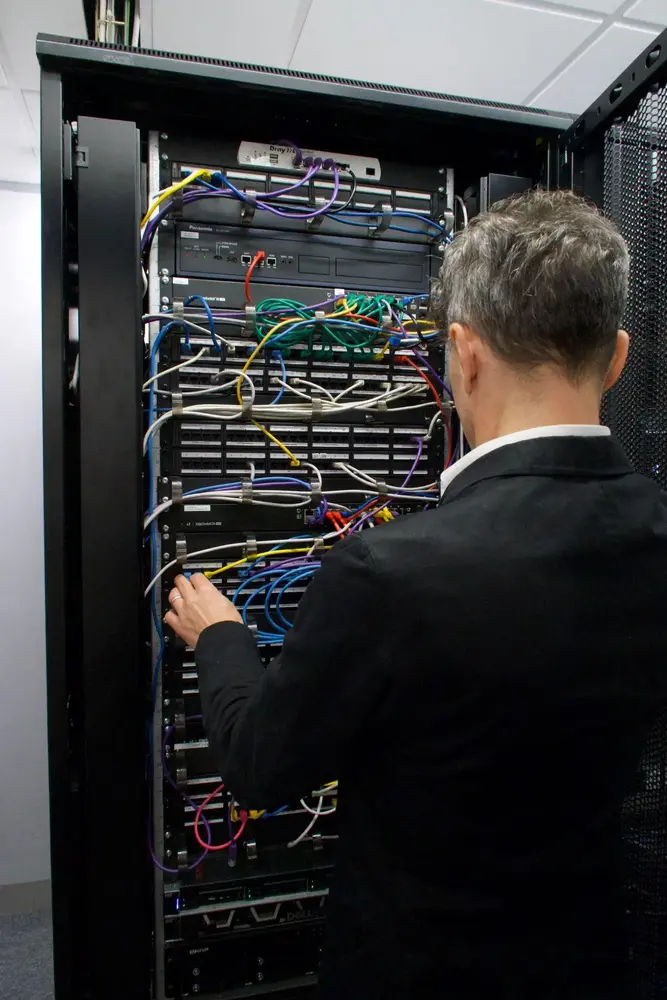
Two services can advertise the same download rate and still feel completely different in daily use. Upload capacity may differ sharply. One connection type may remain steadier at busy times, while another experiences contention, higher latency, or weaker fault commitments. Router quality and Wi-Fi design can further separate a fast and reliable broadband experience from a frustrating one.
Compare the complete service: contractual reliability, available support, recovery, addressing, backup, and internal network performance. Headline speed matters, but broadband technology and operational design determine whether that speed reaches users consistently everywhere when work is most demanding.
- Download speed
- Upload speed
- Connection type
- Contention
- Latency
- Reliability
- Fault response
- Service level
- Static IP requirements
- Backup connectivity
- Router and network configuration
- Wi-Fi coverage
- Technical support

Primary Broadband or Broadband With Backup — What Does Your Business Need?
Not every organisation needs redundancy. A brief interruption may be manageable where staff can switch tasks, use temporary mobile access, or wait without affecting customers. Elsewhere, organisations deem broadband essential to sales, service, or site operations, making even a short outage expensive.
Choose according to consequence, not anxiety. Map what stops, who is affected, how quickly revenue or customers feel the impact, and which temporary options genuinely work. This separates a suitable primary service from a resilient business internet designed to keep priority functions available during a failure without buying protection that adds little practical value.
Primary Business Broadband
Suitable where a temporary internet interruption would be inconvenient but manageable.
- General internet access
- Microsoft 365
- Web applications
- Standard cloud usage
- Smaller offices
- Businesses with lower downtime exposure
Resilient Business Connectivity
Suitable where internet access supports essential operations.
- Cloud telephony
- Payment terminals
- Booking systems
- Customer service operations
- Cloud-hosted applications
- Remote access
- Businesses where connectivity failure immediately affects revenue or customers
Why Choose Our Business Broadband Solutions
Cloud Central brings IT, business communications, cloud, security, and support under one roof, creating clearer ownership when services overlap. Our independent position supports practical advice shaped around your environment, rather than a predetermined catalogue. We consider risk, growth, user experience, and cost together, then explain the tradeoffs plainly.
Flexible contract options can be reviewed alongside technical requirements, while specialists remain readily available beyond installation. The result is not simply the best business broadband on paper. It is a coordinated service built to help your business perform at its best, with room to adapt as your organisation changes and new demands emerge.

Independent Connectivity Advice
Broadband, IT and Communications Under One Roof
Flexible Contract Options
Connectivity Designed Around Your Business
Support From Business Technology Specialists
Solutions That Can Grow With Your Organisation
Business Broadband for Multiple Locations
SMEs with multiple offices, warehouses, retail locations, hospitality venues, branches, or remote sites need one strategic view of service. If each office manager buys separately, contract dates drift, support paths fragment, and site risks remain hidden. Central planning lets UK businesses standardise where sensible while matching each site to local availability and operational demand.
It also creates one route for fault escalation, coordinated upgrades, and resilience decisions. Every location can then support the wider IT environment without forcing identical services onto premises that perform very different roles. That discipline improves visibility as the estate expands.
Standardise Connectivity Across Sites
Centralise Support and Fault Escalation
Plan Different Connections Around Each Site’s Requirements
Add Resilience Where Downtime Matters Most
Keep Connectivity Aligned With Your Wider IT Environment
FAQs
What is business broadband?
It is an internet service designed for companies and workplaces, with greater capacity, stronger reliability, and faster speeds and support than home services. Business class options may include static IPs, enhanced security, and defined repair targets. The right business broadband service supports operations and gives each broadband customer appropriate terms.
What happens to our cloud phone system if the broadband connection goes down?
Office handsets using the failed line will usually stop working. Because the phone system is hosted in the cloud, routing rules can redirect calls to mobiles, softphone apps using cellular data, another site, or voicemail. A tested backup connection can also restore service automatically and protect conversations during the outage.
Should I bundle my business phone line and broadband?
Bundling simplifies billing and may reduce costs by 15% to 30%, depending on the offer. Broadband and phone deals are useful when both services are required, but compare the contract carefully. If your team relies on mobiles or cloud calling, a traditional line may make some business packages unnecessarily expensive.
What happens when your business broadband has a problem?
Operations may stall, card terminals can stop taking payments, and cloud communication can become unavailable. Commercial packages may include priority fault handling, automated line tests, preinstalled 4G or 5G failover, and compensation rights for qualifying prolonged outages. Confirm response targets, escalation routes, and exclusions before a problem with your broadband occurs.
How much broadband capacity do we need for Microsoft Teams, VoIP and cloud applications at the same time?
For about 5 to 10 active users, 15 to 25 Mbps in both download and upload capacity is a sensible starting point for high-definition meetings, cloud calls, browsing, and regular file synchronisation. Actual demand rises with concurrent video, large transfers, backups, device counts, and quality expectations, so measure peak usage.
Can I get business broadband when working at home?
Yes. A service can be installed at a residential address when you work from home or operate a company there, provided network infrastructure is available. Options from BT Business Broadband, EE, Vodafone Business, and other suppliers vary by location. Check availability, contract eligibility, support terms, and installation requirements before ordering.
Do I need to get a phone line with business broadband?
Not necessarily. Full-fibre connections, cable services, and 4G or 5G options can provide internet access without a traditional copper phone line. Older part-fibre or ADSL services may still require one. If you need calling, a digital phone line can be ordered separately or included within broadband and digital phone packages.
Can I claim business broadband on expenses?
Yes. Treatment depends on your business structure and how the service is used. A contract used wholly for work is easier to justify. Where use is mixed, only the allowable business portion may be claimed. Keep invoices and usage evidence, then confirm the position carefully with your accountant or HMRC.